
Jiangsu Nongken Xincao: Integrated Automated Grain Handling & Drying Project
Key Highlights
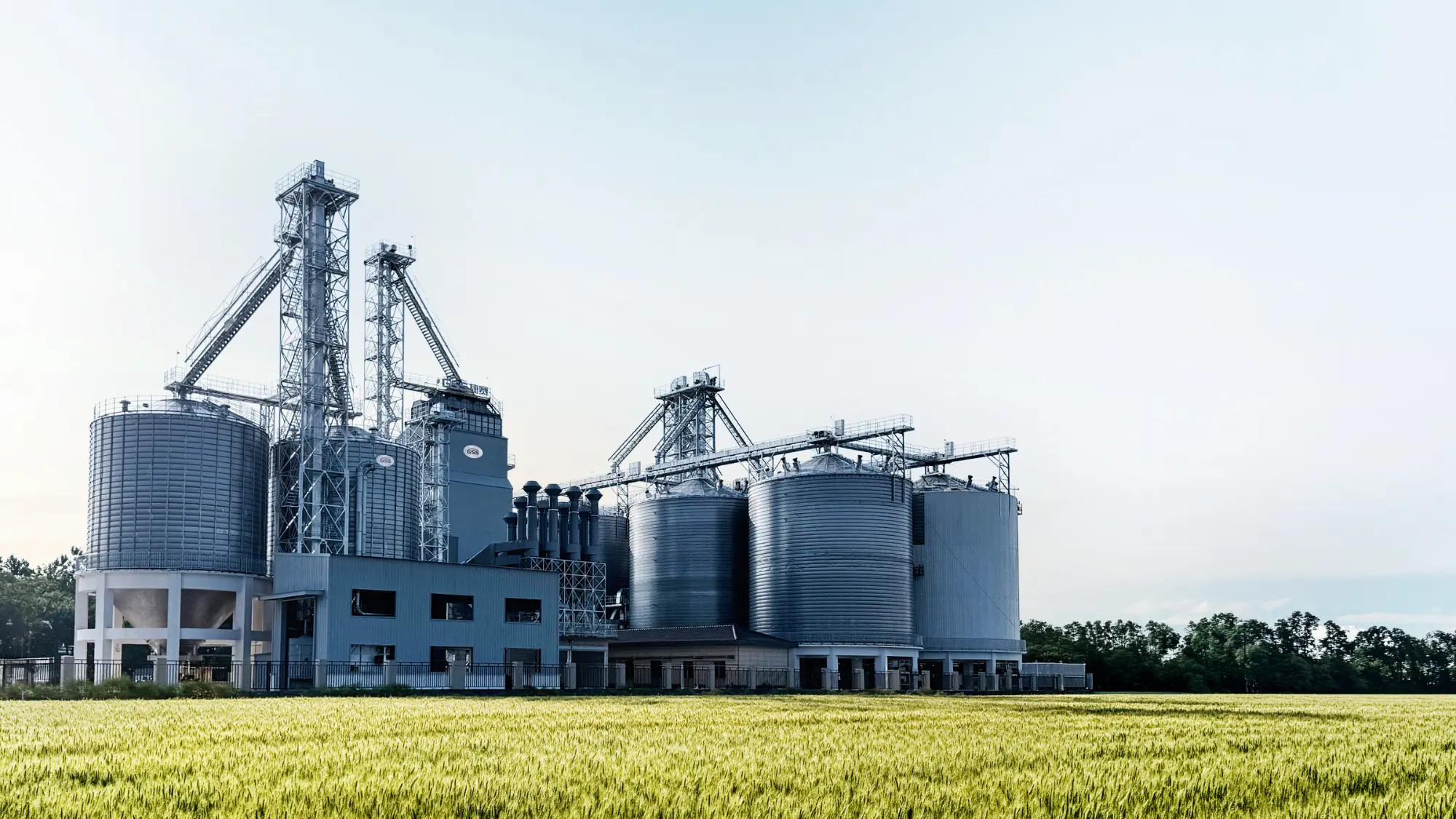
As a major East China grain and oil production base, the Xincao Branch of Jiangsu Agricultural Reclamation Group (Jiangsu Nongken) carries out the 164,737-acre farmland upgrade project. The site requires a full set of high-capacity, flexible, automated grain drying facilities for paddy rice and wheat processing.
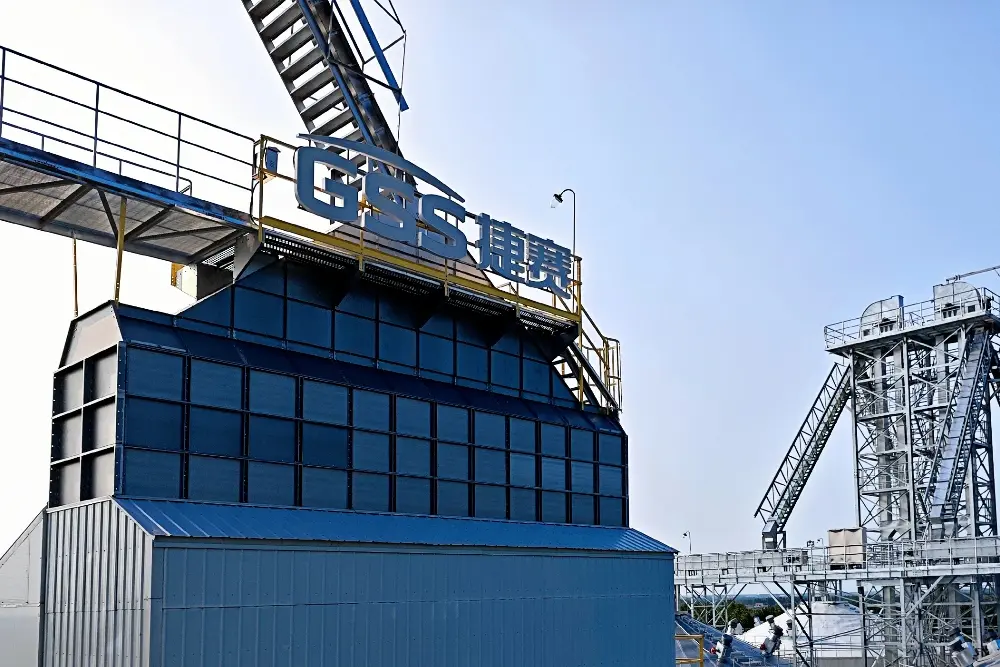
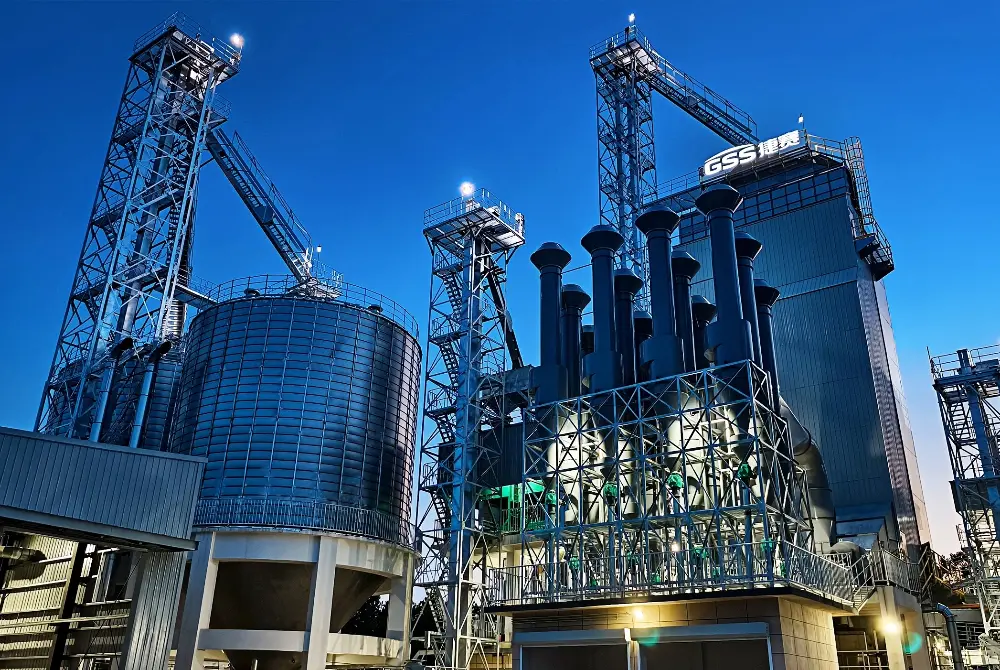
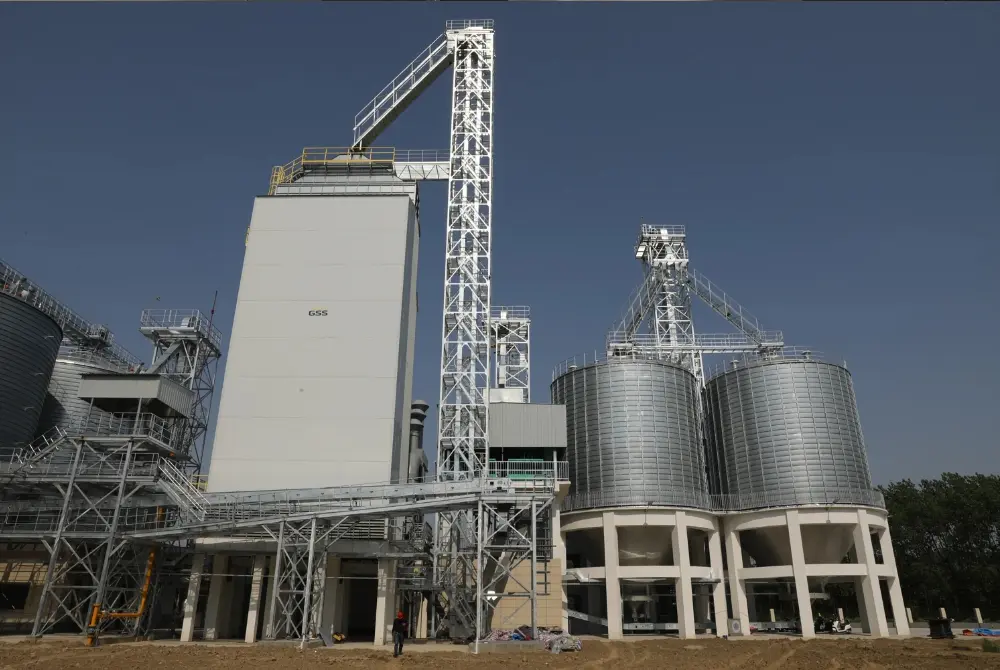
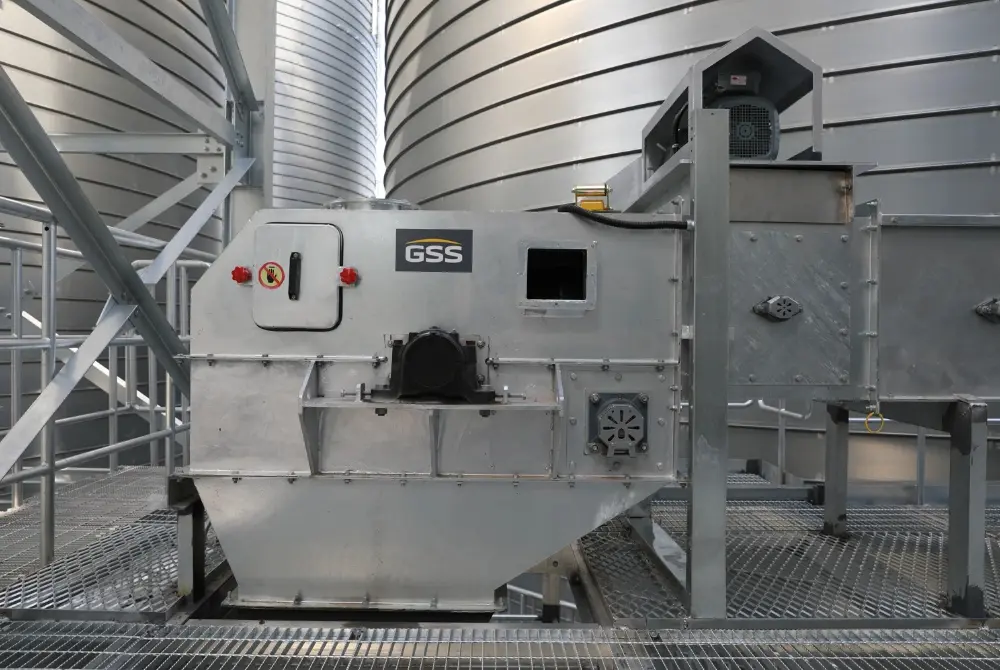
GSS supplied a full automated grain handling and drying system tailored for paddy and wheat. Centered on an 800 t/d continuous mixed-flow grain dryer, the system includes redundant bucket elevators for dual intake lines, dual receiving-pit en-masse conveyors, a 3-stage impurity cleaner, a gallery bulk scale, silo-bottom pneumatic slide gates, reversible belt conveyors, and a smart thermal-aeration monitoring platform.
The 800 t/d continuous drying capacity and dual-line redundancy guaranteed uninterrupted peak-season intake; the 3-tier cleaning and gentle drying process protected paddy and wheat germination and grain quality; the gallery-integrated layout and dual-pit design significantly reduced civil infrastructure and steel construction costs.
Client Profile: A Premier Grain Base in the Yangtze River Delta
Located in the Yangtze River Delta, Jiangsu Nongken (Xincao Branch) is a key agricultural processing and grain reserve base under Jiangsu Agricultural Reclamation Group, a major state-owned agricultural enterprise in China. As a flagship project of the group’s “1-Million-Mu Farmland Transformation Initiative”, the newly built grain drying center integrates raw paddy and wheat receiving, 3-stage cleaning, continuous drying, tempering, precision weighing, and silo storage, serving as a vital strategic logistics hub for regional food security.
Goals & Challenges: Peak Intake Redundancy & Multi-Crop Processing Standards
As a modern regional grain drying hub, the facility faced several common industry challenges during peak harvest season intake and multi-crop drying:
- Peak Harvest Volume & Equipment Redundancy: Short harvest windows require high-capacity drying (800 t/d) and dual-line receiving redundancy to ensure continuous intake even during single-equipment maintenance, preventing grain queue congestion.
- Handling Dual Crops (Paddy & Wheat) & Low Grain Breakage: Paddy and wheat possess distinct physical characteristics and moisture-release rates. The drying process requires gentle tempering and multi-stage impurity removal to protect germination rates and milled grain quality.
- Civil Infrastructure & Steel Cost Optimization: Traditional drying centers incur high civil costs for deep receiving pits and dedicated weighbridge trestles. The plant needed an optimized layout to reduce capital expenditure while enabling future expansion.
GSS Customized Solution: Integrated Bulk Handling & Continuous Drying Package
To fulfill Jiangsu Nongken’s high-standard construction requirements, GSS delivered a customized, integrated bulk handling and continuous drying package specifically engineered for processing paddy and wheat:
- 800 t/d Continuous Mixed-Flow Dryer with Reserved Re-Drying Interfaces: Deployed 1 unit of GSS 800 t/d continuous mixed-flow grain dryer engineered for high-uniformity, gentle thermal moisture removal. The design incorporates reserved batch circulation dryer interfaces, allowing seamless process switching for rice re-drying in subsequent phases.
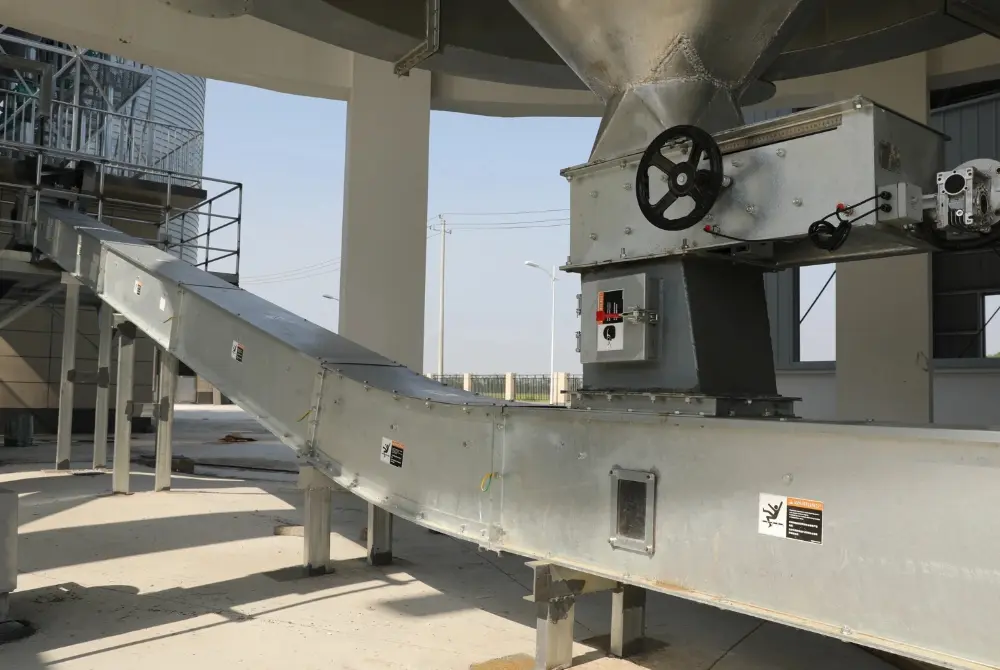
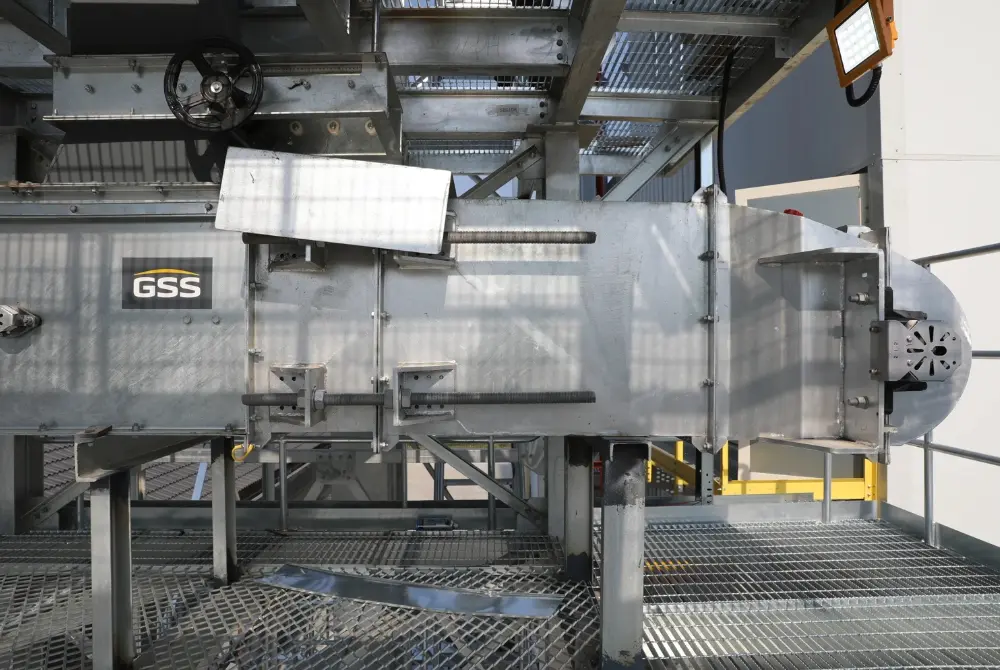
- Redundant Dual Intake Lines & Shallow-Pit Dual En-Masse Conveyors: Engineered dual independent intake lines featuring redundant bucket elevators—allowing cross-use if one side encounters downtime. The receiving pit utilizes dual GSS En-Masse Conveyors to reduce civil pit depth while providing mutual secondary backups.
- 3-Stage Impurity Cleaning & Discharge Aspiration Package: Integrated a rotary vibrating screen paired with aspiration separators to perform 3-stage removal of large, fine, and light impurities. An additional aspiration separator is installed at the dryer discharge to eliminate dust and light chaff generated during drying.
- Gallery-Integrated Bulk Scale & Flexible Silo-Bottom Transfer: Positioned the bulk scale directly above the belt conveyor gallery, eliminating standalone steel support structures. The silo bottom features pneumatic slide gates and reversible belt conveyors, enabling flexible re-drying, truck loading, or dispatch to flat warehouses.
- Smart Thermal-Aeration Control & Scalable Layout: Integrated an automated temperature monitoring system linked with aeration fans to automatically cool silos when temperatures exceed thresholds. The overall “continuous drying, intermediate tempering, and flexible dispatch” layout perfectly accommodates paddy and wheat variations while reserving space for future expansion.
Project Value: High System Redundancy, Quality Preservation, and Lean Engineering
High System Redundancy Ensuring Uninterrupted Peak Operations
Dual intake lines, redundant bucket elevators, and dual-pit en-masse conveyors eliminated single-point failure risks, ensuring smooth round-the-clock grain receiving during peak harvest.
3-Stage Cleaning & Gentle Drying Preserving Grain Quality
The combination of 3-stage cleaning, cross-flow drying, intermediate tempering, and discharge aspiration effectively eliminated impurities and protected grain integrity and germination rates.
Lean Engineering & Smart Automation Cutting Civil & Operating Costs
Gallery-integrated scales, shallow pit designs, and automated thermal-aeration linkages reduced initial steel and civil expenses while lowering manual operation costs.
Building a modern grain drying center requires seamlessly linking every stage from intake and cleaning to drying, tempering, and storage. The complete bulk handling and drying solution provided by GSS has performed exceptionally well in our Xincao project. Its dual intake redundancy and shallow dual-pit conveyors provided high reliability while cutting our civil engineering costs. The 3-stage cleaning and smart temperature-aeration linkage keep our paddy and wheat quality at peak standards. GSS has provided outstanding technical support for our national farmland transformation initiative.
Project Gallery