
GSS Indoor Batch Dryer Solution | Taicang Emergency Agricultural Service Center
Key Highlights
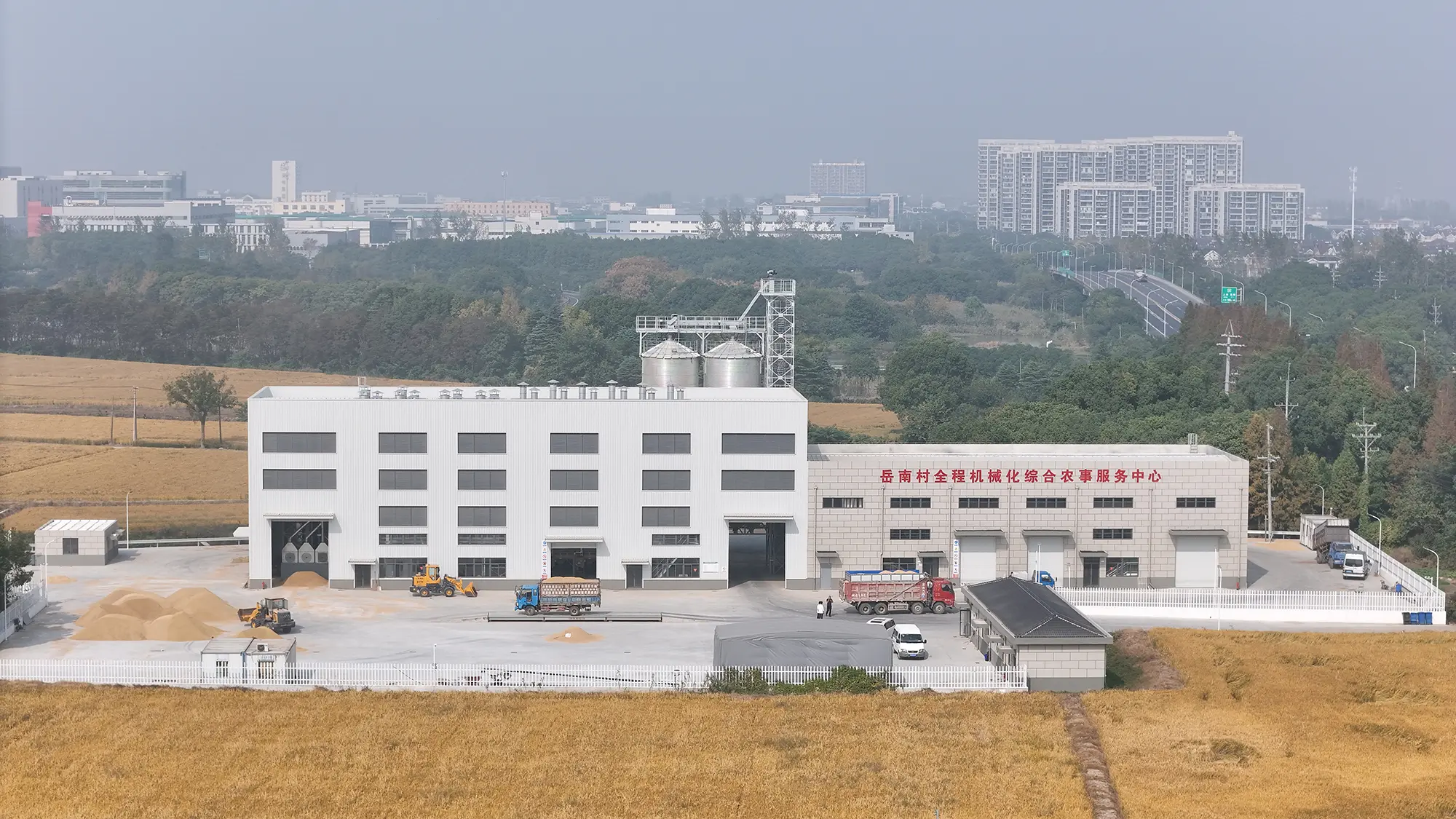
Located in the Yangtze River Delta of East China, Taicang Emergency Agricultural Service Center (Yuenan Base) acts as a regional flagship site for agricultural socialized services. Covering an operational scope of 4,942 acre-cycles of farmland, the facility features a batch drying capacity of 210 tonnes per batch. It needed an integrated clean-energy Indoor Batch Dryer Solution to reduce post-harvest grain losses and strengthen regional emergency & disaster response capacity.
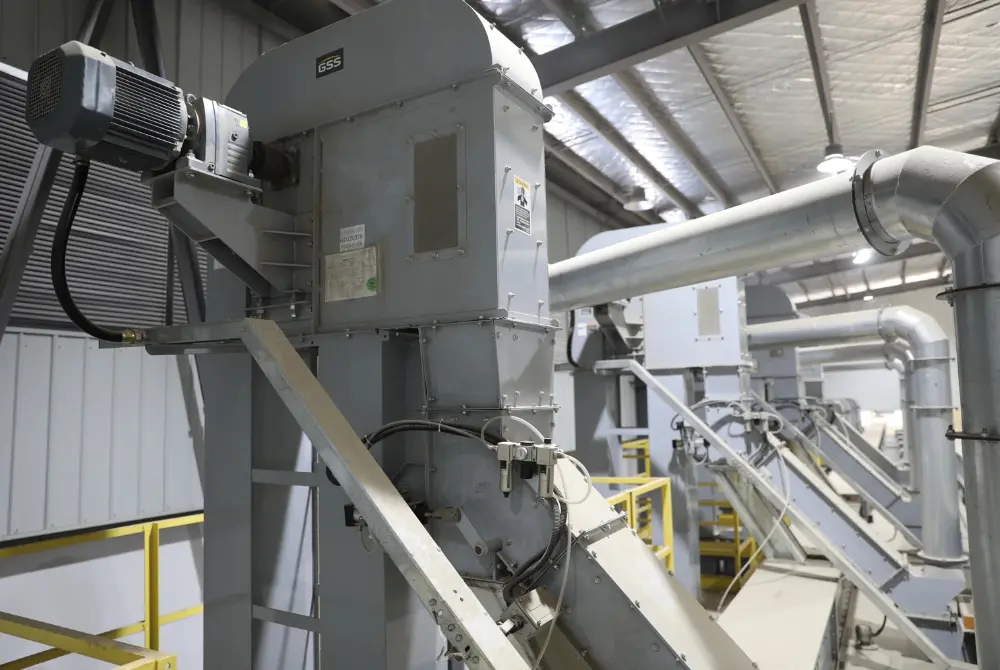
Deployed a complete GSS automated Indoor Batch Dryer Solution specifically engineered for grain. The equipment package centers on 10 units of GSS BD-series batch dryers operating in parallel (4 units of BD30 and 6 units of BD15) powered by eco-friendly air-source heat pumps, integrated with receiving pits featuring bottom-aspiration dust extraction, high-efficiency pre-cleaners, buffer storage silos with automated aeration, and a "spraying + settling" wet exhaust scrubber system.
Eco-friendly air-source heat pumps achieved zero carbon emissions while reducing energy costs by over 50%; flexible parallel batch drying accommodated both large-scale farms and individual smallholders; low-temperature, large-airflow drying preserved seed germination vitality and grain processing quality.
Client Profile: A Regional Emergency Agricultural Service Hub in East China
Located in the Yangtze River Delta, Taicang Emergency Agricultural Service Center (Yuenan Base) is a provincial & municipal flagship demonstration project for regional contracted agricultural services in East China. Designed to serve over 4,942 acre-cycles of farmland with a 210-tonne per batch drying capacity, this modern facility integrates grain receiving, cleaning, intelligent drying and safe buffer storage. It provides emergency post-harvest support for local farming communities and strengthens regional agricultural disaster resilience.
Goals & Challenges: Clean Energy Transition & Flexible Batch Drying
As a modern regional agricultural service hub, the center faced several universal industry challenges during post-harvest grain receiving and drying:
- Clean Energy Adoption & Operating Cost Reduction: Traditional fossil-fueled (diesel/coal) drying generates high carbon emissions and fuel costs. The center required a clean, zero-emission heat source that substantially lowers energy expenses while aligning with municipal sustainability goals.
- Flexible Operations for Scaled Farms & Individual Smallholders: The drying center serves both large agricultural enterprises and smallholder farmers. The system must support flexible batch sizing, gentle low-temperature drying, and precise moisture removal to preserve seed vitality and milled grain quality.
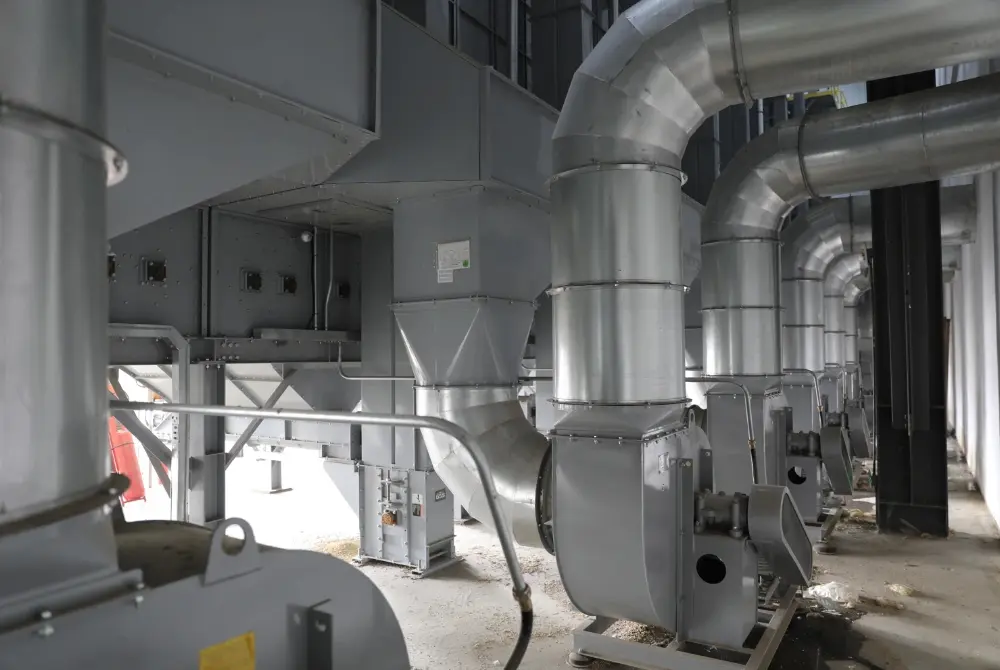
- Clean Environment & Economical Exhaust Treatment: Receiving and drying operations release dust and chaff. Complete dust control at the receiving pit and economical wet exhaust scrubbing were required to satisfy local environmental standards.
Customized Solution: Full-Process Clean-Energy Intelligent Drying Solution
To meet the high construction standards of the regional agricultural service center, GSS delivered a customized, one-stop intelligent drying and bulk handling solution specifically engineered for processing grain:
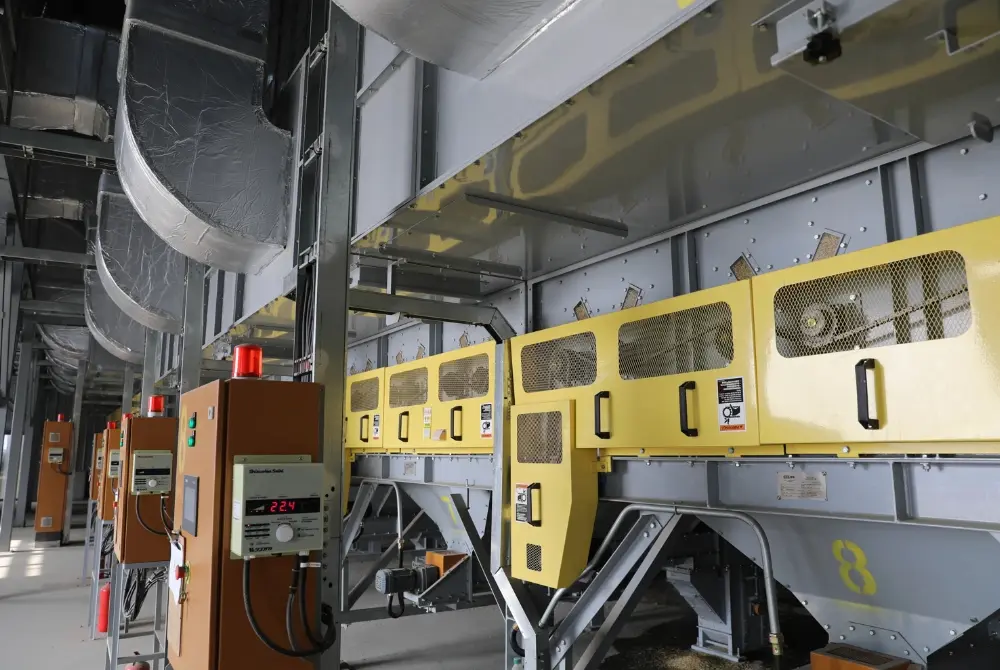
- GSS Clean-Energy Indoor Batch Dryers (10 units in parallel): Deployed 10 units of GSS BD-series indoor batch dryers operating in parallel, including 4 units of BD30 model (30-ton capacity) and 6 units of BD15 model (15-ton capacity). Powered by eco-friendly air-source heat pumps, the system utilizes thin-layer uniform heating and gentle low-temperature, high-airflow drying physics to preserve grain and seed quality while reducing energy costs by over 50%.
- Dust-Controlled Receiving & High-Efficiency Pre-Cleaning Package: Engineered a dedicated receiving pit compatible with both truck unloading and loader feeding, equipped with bottom-aspiration dust extraction. Integrated a high-efficiency cleaner to remove impurities prior to drying, preventing clogging and ensuring smooth airflow inside dryers.
- Buffer Storage with Aeration & Wet Exhaust Scrubber: Transferred dried grain into temporary buffer silos fitted with professional aeration devices for safe, long-term storage. Integrated a “spraying + settling” wet scrubber system to process drying exhaust gases economically and achieve green emission compliance.
- Smart PLC & HMI Automated Control System: Equipped each dryer with PLC controls and HMI touchscreens for real-time parameter tracking and fully automated drying control, eliminating manual guesswork and lowering labor costs.
Project Value: Energy Savings, Quality Preservation, and Regional Disaster Resilience
Over 50% Energy Savings with Zero Carbon Emissions
Integrating air-source heat pumps eliminated diesel combustion emissions and cut energy costs by over half, delivering an eco-friendly, highly economical drying paradigm.
Multi-Unit Parallel Flexibility Preserving Grain & Seed Quality
The parallel setup of 4 BD30 and 6 BD15 dryers enabled custom batch allocation for both large farm intakes and smallholder batches, while gentle low-temperature drying preserved original seed germination vitality.
Building a Regional Service Benchmark for Disaster Mitigation
Delivering a 210-ton daily batch capacity, the center successfully resolved local grain drying and storage bottlenecks, creating a reliable disaster-mitigation model for regional agricultural modernization.
Establishing a provincial-level regional agricultural emergency service center requires drying technology that combines operational flexibility, low carbon emissions, and strict grain quality protection. The complete batch drying and dust extraction system provided by GSS has delivered exceptional results in our Yuenan Village facility. The 10 heat-pump-driven batch dryers handle both large agricultural batches and smallholder loads with great flexibility, while cutting our energy expenses by over 50%. GSS has provided solid equipment support for our regional agricultural service infrastructure.
Project Gallery