

8 Things to Know About Paddy Drying
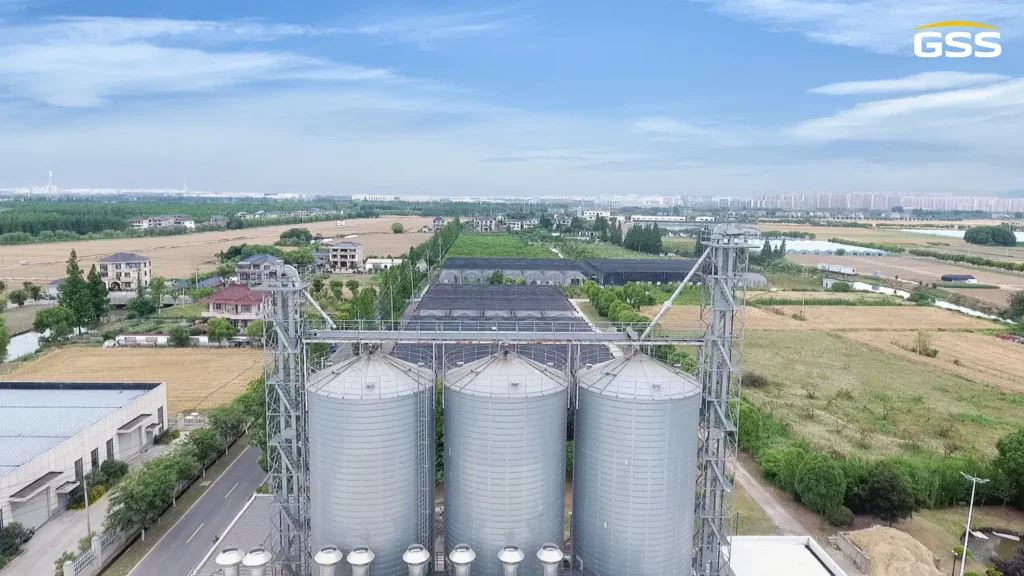
Paddy drying is one of the most crucial post-harvest processing steps in agriculture and food industrial technology. Proper drying preserves grain quality, prevents mold, minimizes crack development (checking/fissuring), and maximizes head rice yield.
This comprehensive guide covers 8 things you need to know about paddy drying—from the physical structure of a grain kernel to advanced industrial process flows.
Why Is Paddy Harder to Dry Than Corn or Soybeans?
Paddy is a heat-sensitive crop. When drying is too fast or the parameters are set wrong, the kernels develop fissures (known as “fissuring” or checking) — internal cracks that lower milling recovery and head rice yield.
The structure of the paddy kernel is the second reason. A paddy grain consists of a hard outer husk around the rice kernel inside. The husk protects the rice during field handling, but during drying it works against you: it blocks moisture inside the kernel from migrating to the surface. That makes paddy inherently slower and trickier to dry than maize or soybeans.
Which Parameter Matters Most in Paddy Drying?
Target moisture, drying air temperature, discharge rate, moisture points per pass — all of these matter when selecting and operating a continuous process dryer. But if drying quality is your priority, grain temperature outweighs the rest.
- Commercial rice: grain temperature must not exceed 45°C.
- Drying air temperature should not exceed 60°C — a rule that holds consistently in practice.
- Seed rice: grain temperature must not exceed 38°C.
Why Choose Continuous Paddy Drying?
Continuous drying systems (such as GSS continuous crossflow or mixed-flow dryers) offer significant advantages over traditional batch or sun drying methods:
- High Efficiency & Large Capacity:Designed to handle high-volume processing continuously without downtime between loads.
- Uniform Moisture Reduction:Precise control over hot air distribution prevents localized over-drying or under-drying.
- Optimized Energy Consumption:Continuous heat recovery and balanced airflow reduce total fuel/energy requirements per ton.
- Improved Paddy Quality:Controlled temperature ramps minimize thermal shock and grain cracking.
Key Phases of Paddy Drying
Initial Heating Phase:The grain absorbs heat; moisture at the surface starts to evaporate rapidly.
Constant-Rate Drying Phase:Free surface moisture evaporates continuously at a steady rate.
Falling-Rate Drying Phase: Moisture movement is dictated by internal diffusion from the embryo to the pericarp. Drying slows down, requiring precise temperature control to prevent thermal cracking.
Typical Continuous Paddy Drying Process Flow
A complete commercial paddy drying line relies on three core stages working together seamlessly:
Truck Receiving → Buffer Bin → Continuous Dryer → Tempering Silos.
Process Components:
Buffer Bin:Receives harvested paddy directly from farms or field combines.
Continuous Grain Dryer:Hot air is blown through the grain column while the grain moves downward via gravity. Moisture is actively extracted in stages.
Tempering Silos:Paddy is allowed to rest periodically without hot air blowing. This lets internal moisture migrate to the outer layer naturally, equilibrating internal stress before further drying or storage.
Recommendations from GSS:
Standard configuration: 1 buffer bin + 3 tempering silos when grain arrives by truck.
If incoming moisture varies widely, use 2 buffer bins — one for high-moisture paddy, one for low-moisture paddy — so the dryer always feeds from a uniform batch.
Buffer bin capacity: sized for one day of receiving, typically 10–12 operating hours per day.
Tempering silo capacity: about 8 times the dryer’s hourly output.
Every silo should be equipped with temperature monitoring and ventilation systems.
How Do You Handle Paddy with a Wide Moisture Range?
At harvest, moisture can differ sharply from field to field and load to load. Drying mixed-moisture paddy as one batch produces uneven results. Two measures solve it:
Split the intake at a 22% moisture boundary and dry the two streams separately: paddy at or above 22% moisture goes into one buffer bin, paddy below 22% goes into another.
When moisture differences are large, slow the drying rate and extend the tempering time — and remember: no ventilation during tempering.
How Long Should Tempering Last for Paddy Drying? 8–12 Hours Is the Working Range
Important Time Considerations:
When it comes to paddy drying quality, the two critical determining factors are: Drying Temperature + Tempering.
- No ventilation during tempering;
- Moisture reduction rate has minimal impact on tempering time.
Based on theoretical principles and operational experience, GSS generally recommends a tempering time of 8 to 12 hours. Under resource-constrained conditions, the tempering duration should be at least 4 hours.
The tempering process for paddy can be categorized into stages: 4 to 12 to 17 hours. After 8 to 12 hours of tempering, moisture content approaches stability; between 12 and 17 hours, moisture uniformity is further enhanced, though potential temperature rise must be monitored during this phase.
Fissure Control During Paddy Drying
The phenomenon known as “grain cracking” or “fissuring” directly reduces the yield of whole head rice during milling.
Key Factors to Prevent Fissuring:
Air Temperature Control:Avoid excessively high hot-air inlet temperatures (>65℃ for high moisture grain).
Tempering Time:Maintain adequate tempering ratios (typically 3:1 or 5:1 tempering-to-drying time ratio).
Cooling Phase:Gradually cool dried paddy down to within 5℃ of ambient temperature before placing into final bulk storage.