

“Grain-Oriented” to “Grain-Cash-Feed” Coordination: How GSS Empowers China’s Agricultural Cropping Transformation
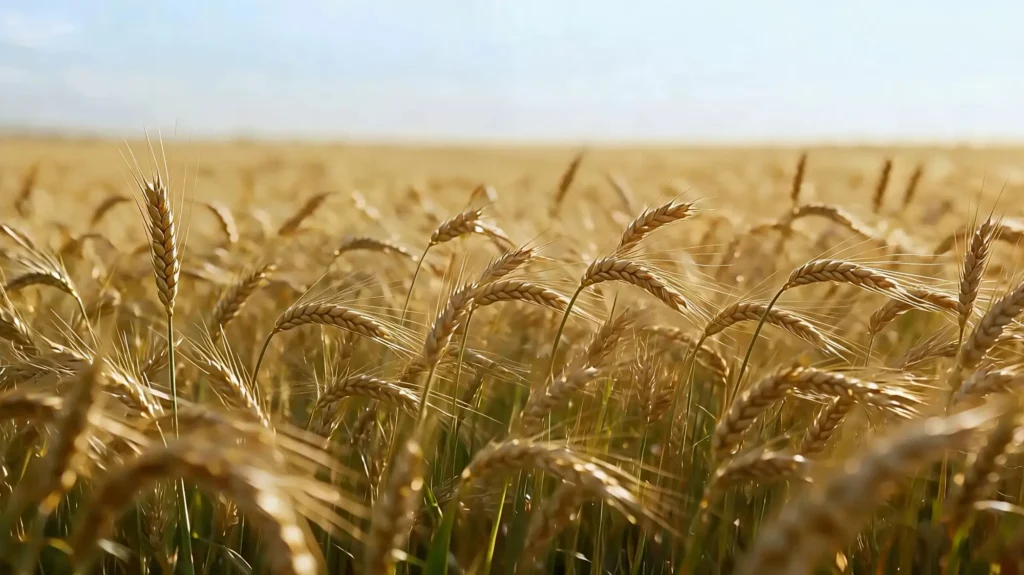
As the government emphasizes agricultural modernization, establishing a diversified food supply system that balances grain crops, cash crops, and feed crops has become a major strategic priority. Today, we explore the evolution of China’s cropping structure and how GSS Systems’ intelligent agricultural equipment solutions empower this nationwide transformation.
1. The Evolution of China’s Cropping Structure
Understanding China’s modern agricultural landscape requires looking at the historical shift in cropping systems over recent decades:
Phase 1: “Grain-Oriented” Monoculture Cropping Structure
In the early decades following the founding of the People’s Republic of China, the primary challenge in national food security was quantitative scarcity. Grain crops accounted for approximately 90% of total agricultural sown area—a mono-culture cropping structure strictly centered on grain production.
Phase 2: Transition to a “Grain + Cash” Cropping Structure
Starting in the late 1960s and accelerating after 1978, economic and cash crops (cotton, oilseeds, sugar crops, tobacco, hemp, and medicinal herbs) gained strategic focus.
By 1988, the ratio of grain crops to cash crops (including other crops) balanced out to 76.0 : 22.7.
However, rapid growth in animal husbandry created a sharp increase in feed demand. Because feed production was not yet decoupled from human food grain production, a severe “human vs. livestock competition for grain” emerged.
Phase 3: Advancement to the “Grain + Cash + Feed” Ternary Cropping Structure
Entering the 1990s, agricultural supply shifted from long-term shortage to a pattern of basic aggregate balance—with surpluses during bumper harvests. While continuing to focus on increasing output, markets began demanding higher standards for varieties and quality, marking a new historical milestone in agricultural structural adjustment.
In 1992, Food Grains + Cash Crops + Feed Crops ternary cropping structure is officially advocated.
Decoupling Feed Production: Feed production became an independent agricultural sector, turning joint human-livestock grain consumption into specialized, targeted production.
Expanding Feed Definitions: Feed crops expanded beyond grain corn to include specialized forage grasses and whole-plant silage corn (harvested for total biomass rather than just grain kernels).
The proposal of this grain-cash-feed ternary structure is an inevitable product of China’s agricultural development. It provides a clear direction for agricultural restructuring, effectively balancing the proportions of grain, cash crops, and animal husbandry within the broader agricultural economy.
2. Strategic Synergies: How GSS Systems Empowers the Three-Tier Model
As agricultural supply-side structural reforms deepen, handling multi-crop, high-volume, and varied post-harvest material flows requires modernized grain logistics, drying, and storage systems.
GSS Systems delivers end-to-end, eco-friendly, and intelligent post-harvest solutions designed to optimize every pillar of the agricultural economy:
| Cropping Pillar | Target Crops | Key GSS Solutions & Equipment | Industrial Value |
| Food Grains | Rice, Wheat, Food Corn | •Mixed-flow and crossflow process dryers
•Assembled steel silos & grain condition monitors •Enclosed & air support belt conveyors |
Reduces post-harvest losses, maintains grain quality, and supports stable national food reserves. |
| Cash Crops | Soybeans, Oilseeds, Sugar/Starch Crops | • Oilseed & protein handling systems
•Continuous intake belt conveyors •Bulk material storage & terminals |
Optimizes bulk material handling at ports, processing plants, and industrial agri-food parks. |
| Feed Crops | Feed Corn, Soymeal, Biomass Forage | • Feed raw material intake & pre-treatment
• Bucket elevators •Flat-bottom & cone-bottom reclaimers |
Enables smooth bulk handling for animal feed mills, processing complexes, and large-scale livestock operations. |
3.Conclusion
The evolution of China’s agricultural landscape—from a grain-mono-culture to a balanced “grain, cash, and feed” model—marks a vital shift toward sustainable food systems. Intelligent agricultural equipment serves as the backbone of this transformation, minimizing post-harvest losses and integrating the value chain.
As a trusted partner in global agrifood systems, GSS Systems empowers every link from field to factory floor. By delivering smart drying, storage, and zero-spill conveying for staple grains, oilseeds, and feed, GSS continues to safeguard food security and drive the modernization of agricultural supply chains worldwide.