

Batch or Continuous Grain Drying? Answer These 4 Questions Before You Choose
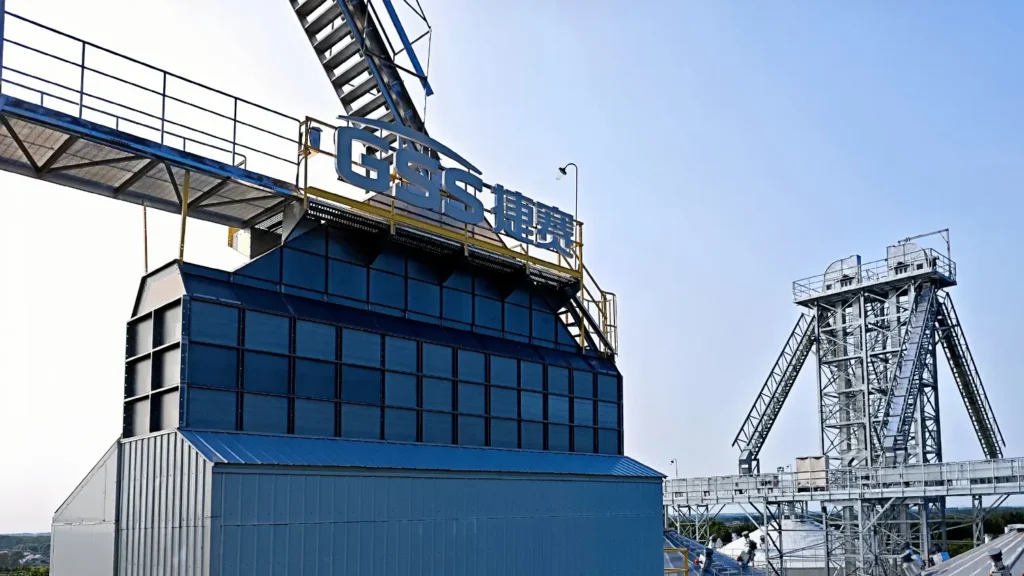
In post-harvest grain processing, choosing between Batch Drying and Continuous Drying (including cross-flow and mix-flow process designs) directly impacts thermal efficiency, daily throughput, and post-drying kernel quality.
Instead of asking “which drying method is better,” building a systematic evaluation framework is key. By answering these four core operational questions in order, grain producers and commercial facilities can precisely align equipment architecture with crop characteristics, throughput goals, and capital budgets.
Q1: What is Your Main Crop?
Different crops exhibit varying thermal tolerances and water retention capacities. Matches must account for heat sensitivity:
- Paddy, Seed Grain & Heat-Sensitive Crops
If you mainly process paddy, seed grain, or other heat-sensitive crops, batch drying is the safer, higher-quality choice. Utilizing low-temperature, high-air-volume thin-column cross–flow drying principles paired with stepped temperature control, this method adjusts air temperature throughout the drying cycle rather than stress-testing the grain with constant high heat. By minimizing thermal stress and protecting internal cell structures, it directly reduces stress cracking, prevents milling loss, and preserves seed germination rates.
- Commodity Corn, Wheat & Oilseeds
If you mainly process commodity grains such as corn and wheat—especially freshly harvested high-moisture corn—continuous drying, particularly a Mix-Flow Process Dryer, offers a clear operational advantage.
High-moisture corn requires rapid, large-scale moisture extraction at high throughput a batch dryer simply cannot match. Mix-flow designs achieve this by passing grain through specialized pentagonal air ducts with variable cross-sections, utilizing alternating hot and cold air cycles. This ensures uniform air velocity and homogeneous heat distribution, allowing rapid moisture removal across massive tonnages without localized overheating, thermal stress, or kernel damage.
Q2: What is Your Daily Throughput?
Operational scale dictates whether modular flexibility or continuous processing delivers the best return:
- Small-to-Medium Operations & Multi-Crop Facilities (< 100 Tons/Day)
For small-to-medium farms and grain depots processing under 100 tons per day—especially those switching crops frequently—batch drying offers the most economical solution.
Batch drying provides a flexible “single-unit or parallel connection of multiple units” deployment. When managing diverse crop varieties or fluctuating harvest intake rates, batch drying systems allow rapid crop changeover and isolated batch processing without energy waste from partial loads. As harvest volumes grow, facilities can scale capacity incrementally by adding parallel units, ensuring capital expenditure aligns directly with actual throughput needs without paying for unused capacity.
- Commercial Terminals & Large Grain Hubs (Hundreds to Thousands Tons/Day)
For high-throughput grain terminals, large depots and port logistics facilities operating at commercial volumes, continuous process drying is practically the better option.
At commercial scale, operational economics shift: the steady-state thermal efficiency of a continuous drying column running non-stop throughout the harvest window outperforms a bank of batch dryers in both labor requirements and energy cost per ton. Continuous systems maintain uninterrupted grain flow, eliminating intake bottlenecks during peak receiving seasons.
Q3: What is the Grain Used For After Drying?
End-use economics determine whether you should prioritize price premiums (quality-driven) or low operational cost per ton (volume-driven):
- Seed Production, Premium Export Grain & Paddy Milling
For grain destined for seed, premium export, or paddy milling, quality directly dictates market price: cracking/fissuring rates, physical breakage, and seed germination determine your final margin. Batch drying—or continuous Crossflow Process Dryers equipped with outside tempering—is the optimal engineering route.
By allowing grain to rest in tempering bins between drying passes, these systems give kernels adequate time to equalize internal moisture gradients and release thermal stress. This process minimizes thermal shock, preserves kernel cell integrity, and maximizes both germination rates and head rice yields during milling.
- Feed, Starch, Industrial Alcohol & Bioenergy
For commodity grain destined for livestock feed, starch extraction, ethanol, or bioenergy, market quality tolerance is wider, making unit drying cost (OPEX per ton) the primary profitability driver. Mix-Flow Process Dryers excel in these high-tonnage industrial applications through advanced heat-recovery engineering.
By recirculating up to 90% of hot air from the drying and cooling zones back into the heating system, mix-flow dryers drastically reduce drying costs—whether powered by natural gas, steam, biomass, or heat pumps. At hundreds or thousands of tons per day, this recovered energy delivers substantial fuel savings that convert directly into net profit.
Q4: What is Your Budget and Site Situation?
Capital expenditure (CapEx) and operational footprint dictate long-term cost per ton:
- Lower Entry Capital & Indoor/Shelter Installations
For operations seeking to minimize initial capital expenditure, batch dryers offer a lower entry investment, rapid deployment, and a fast payback period. Their compact physical footprint makes them ideal for indoor installations, existing warehouses, or simple shelter arrangements without requiring expensive high-tower infrastructure.
This modular approach suits businesses planning step-by-step expansion: operators can add parallel drying units incrementally as receiving volumes grow, ensuring capital is deployed only when increased grain tonnage justifies the investment.
- High-Volume Operations & All-Weather Outdoor Footprints
Continuous dryers are engineered as free-standing outdoor structures that eliminate the need for expensive building or housing enclosures. Featuring rugged, waterproof construction—including weatherproof top covers, sealed drying columns, and heavy-duty duct flanges—these systems are built for all-weather, 24/7 exposure with operational lifespans exceeding 20 to 30 years.
Although the upfront capital expenditure is higher than modular batch units, that investment is rapidly amortized across massive seasonal tonnages. Over a long service life, continuous dryers deliver a significantly lower long-term drying cost per ton—the higher your volume and the longer you run, the further your operating cost falls.
Selecting the right drying technology is not about choosing the “most advanced” machine; it is about engineering precise alignment between crop physiology, harvest volume, and post-harvest economics.
By answering these four core questions, grain processors can transition from arbitrary equipment selection to an ROI-driven engineering investment that safeguards grain quality and maximizes commercial value season after season.
Not sure which of the four questions your operation falls on? Send us your crop, daily volume, target moisture and site conditions — GSS engineers will recommend the right dryer for your harvest.