

Technical Analysis & Solutions for Drag Conveyor Chain Deviation
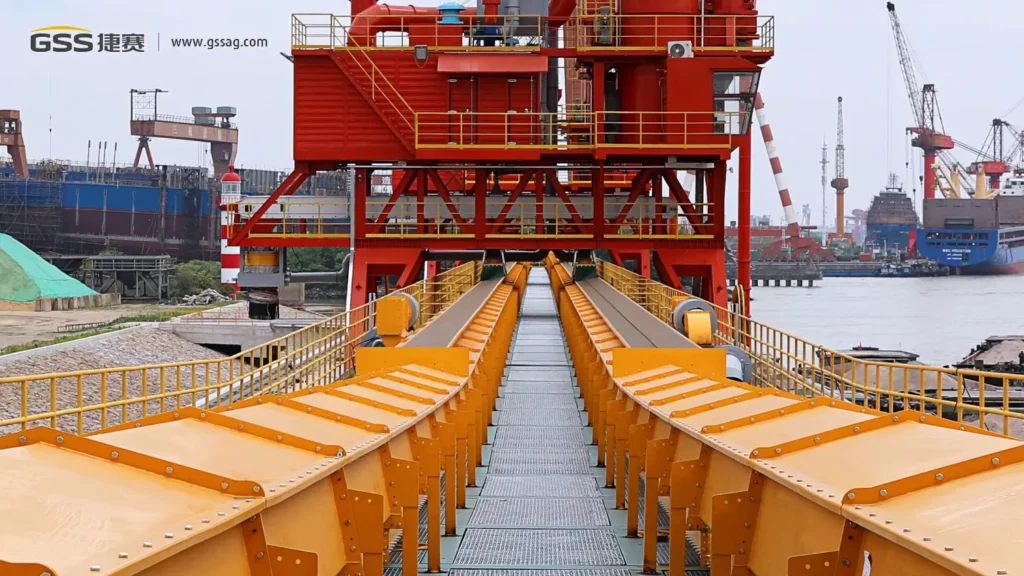
Drag conveyors are core material handling equipment in the grain, oil processing, and bulk material industries. In actual operation, chain deviation is a common mechanical fault. If not addressed promptly, it can easily lead to chain derailment, flight jamming, equipment downtime, and even safety accidents.
This article provides an in-depth analysis of drag conveyor chain deviation from three dimensions: structural principles, root cause analysis, and standardized troubleshooting procedures, offering a standardized solution.
1. Drag Conveyor Structure & Working Principle
A drag conveyor mainly consists of a drive head section, intermediate sections, a tail section, engineering chains, chain attachments, detection devices, drive units, safety devices, and other auxiliary equipment. The engineering chains are connected with the chain attachments and operate inside a sealed casing, forming a sealed, continuous conveying system.
When driven by the drive unit, the engineering chains inside the drag conveyor run smoothly along the bottom plate and guide rails, driving the scraper blades to push the material forward at a corresponding speed, thereby achieving continuous material conveying.
2. Five Common Causes of Chain Deviation
Chain deviation refers to the phenomenon where the chain fails to maintain its intended path or ideal trajectory during operation. In essence, it is caused by uneven tension on opposite sides of the chain or a failure of physical constraints. Common causes are as follows:
2.1 Issues with Chain and Sprocket
- Manufacturing Tolerances: In mass production, inconsistent stretch on the two sides of the chain, or the presence of slight, unidirectional side bow (within permissible limits), can cause a new chain to drift toward one side during initial operation.
- Alignment Faults: The chain is driven by sprockets. If sprockets are not properly aligned, calibrated, and verified prior to chain installation—especially when misalignment occurs between the sprockets and the chain—it creates irregular tension across the chain, leading to deviation.
- Uneven Wear: Prolonged operation causes excessive chain elongation, which increases the clearance between chain links and reduces tension. As a result, the chain wobbles or twists during operation, triggering deviation.
2.2 Uneven Loading
During operation of drag conveyor, if the material is distributed unevenly—specifically, if there is an excess of material on one side—the load on that side of the chain becomes excessive. This causes the chain to shift toward the side with the lighter load, resulting in chain deviation.
2.3 Rack & Guide Rail Deformation
Guide rail unevenness: Height discrepancies between the rails on either side, depressions caused by wear, or misaligned joints.
Deformation of intermediate sections: The mast structure loses its overall straightness—exceeding tolerance limits—due to external impacts or thermal expansion and contraction.
Both of these conditions can cause the engineering chain to deviate during operation.
2.4 Material Accumulation in Intermediate Sections
When conveying highly viscous or high-moist materials, particles easily accumulate in the gaps between chain links and the bottom plate. Once compacted, this build-up lifts the chain, causing a “floating chain” condition where it derails from its normal running track, leading to deviation.
2.5 Maintenance & Other Factors
Because wear during chain-and-sprocket mesh is not completely uniform, long-term operation may lead to severe uneven wear on one side of the sprocket or at the tooth crests. In such cases, even if a new chain is replaced, poor mesh engagement between the sprocket and chain will persist, resulting in continued deviation.
3. How to Fix Chain Deviation: A Step-by-Step Guide
When a drag conveyor chain deviates, troubleshooting should follow the sequence steps:
Step 1: Main Machinery Installation Tolerance & Straightness Verification
Prioritize checking the frame and casing for deformation. According to national standards and engineering specifications, alignment accuracy must meet the following criteria:
Head and Tail Sprocket Alignment: The deviation between the symmetrical center plane of the head/tail sprockets and the symmetrical center plane of the conveyor trough must be ≤2 mm.
Overall Straightness:
- Equipment with total length L < 30 m: Straightness error ≤ 5 mm.
- Equipment with total length L ≥30 m: Straightness error ≤ 8 mm.
Intermediate Section Bottom Plate Flatness: The bottom plate flatness between two adjacent intermediate sections must be ≤ 1 mm.
Step 2: Internal Guide Rail Flatness Inspection
After confirming that the frame accuracy is compliant, inspect the internal guide rails. The flatness error between the guide rails on both sides must be controlled within ≤ 2 mm.
Step 3: Addressing Uneven Material Loading and Material Accumulation
Material Accumulation / Floating Chain: Install hold-down devices inside the casing, and increase the arrangement density of cleaning scrapers.
Uneven Feeding: Adjust the direction of the inlet chute or switch to a side-balanced feeding method to ensure balanced forces on both sides of the chain.
Step 4: Targeted Repair Based on Equipment Condition (New vs. Aged)
- For Newly Installed Equipment:
Slight deviation without wear: Mostly caused by cumulative manufacturing tolerances. Provided there is no rubbing between scrapers and side plates, it typically self-corrects after a break-in period.
Severe deviation with rubbing: If the chain structure permits, a section of the chain can be removed, flipped 180° along its running axis, and reinstalled to offset side bow. (Note: This method only applies to straight-conveying chains without directional restrictions; it is not applicable to curved drag conveyors. )
- For Long-Operating Equipment:
Inspect sprockets, chains, and guide rails for wear, and promptly replace components that have reached their wear limits.
If deviation is caused by mixing old and new chains: If no side plate rubbing occurs, allow time for break-in to self-correct; if rubbing occurs, flipping selected chain links or replacing adjacent chains entirely is recommended.
4. Preventive Maintenance & Chain Replacement Standards
Effective preventive maintenance is critical to extending equipment service life and preventing deviation faults:
Dynamic Tension Monitoring: Periodically check and adjust chain tension to prevent excessive looseness, which causes swaying or twisting during operation.
Regular Lubrication & Cleaning: Periodically clean the casing interior when processing viscous materials to keep guide rail surfaces smooth and prevent material compaction into hard lumps.
Chain Pitch Elongation Criteria:
The average pitch elongation limit for engineering chains is 3% to 6% of the theoretical pitch. Once chain elongation exceeds this limit, the entire chain set must be replaced; mixing old and new chains over extended periods must be strictly avoided.
Chain Deviation in drag conveyor is a critical factor affecting equipment operation and demands close attention. By regularly checking chain tension, ensuring sprocket alignment, maintaining guide rail and intermediate section levelness, and integrating a robust maintenance schedule with real-time monitoring systems, chain deviation can be effectively minimized—ensuring efficient, safe drag conveyor operation while elevating overall production efficiency and operational safety.