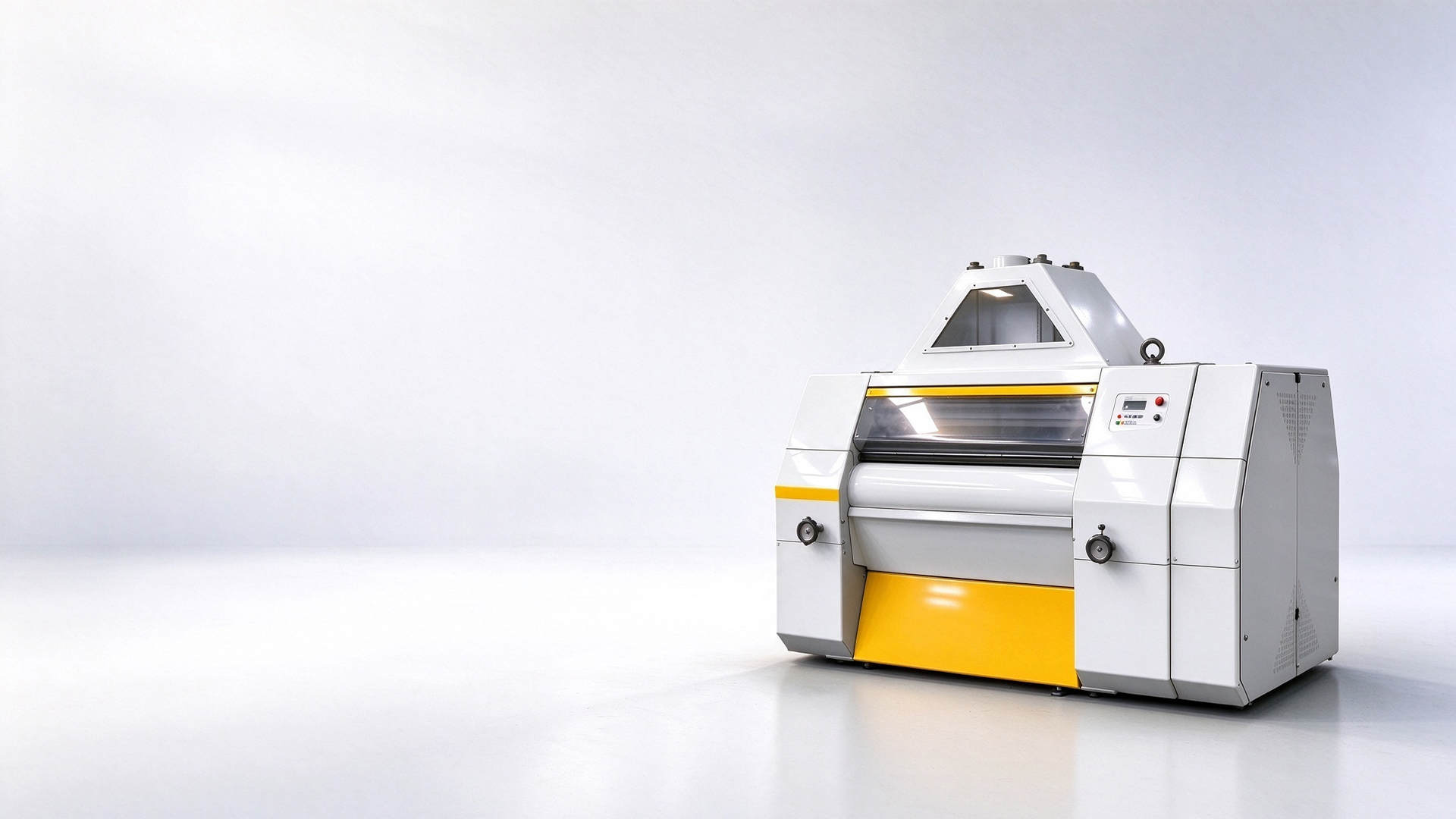
Flour Roller Mill image

Flour Roller Mills

Precision Grinding Technology for High-Yield & Food-Grade Grain Processing

Highlights

  • Premium grinding rollers (800–1250 mm standard)
  • 304 stainless steel food-contact surfaces, contamination-free
  • Integrated heavy cast iron base for stable continuous operation
  • Advanced VFD feeding system for consistent material distribution
CE MarkedEU Conformity
ISO 9001Quality Management
Machinery Directive2006/42/EC

Performance Features

01

Food‑grade sanitary design

Key parts in contact with materials adopt food‑grade 304 stainless steel. The equipment features no sanitary dead corners and minimal material residue, complying with food‑safety requirements for grain processing. Its feeding‑zone structure facilitates easy daily cleaning and maintenance.

02

Variable‑frequency uniform feeding

Equipped with variable‑frequency feeding system to stably control feeding status. It keeps uniform material thickness, optimizes grinding working condition, improves finished product quality and realizes energy saving.

03

Cast‑iron base for high stability

The whole machine adopts cast‑iron base with excellent shock‑absorbing performance and anti‑deformation capability. Low operation vibration helps maintain long‑term grinding accuracy and improve overall equipment reliability.

04

Convenient maintenance‑oriented structure

Optimized machine structure enables easy disassembly, cleaning and inspection for grinding roller unit and feeding unit, shortening downtime for maintenance. Elastic tensioning mechanism for transmission automatically compensates component deformation and extends service life of spare parts.

FAQ

How do buyers choose the optimal roller mill configuration for their flour processing capacity?
Selection is primarily based on daily grinding capacity, plant layout constraints, and required roll length (ranging from 600 mm to 1,250 mm / 23.6 in to 49.2 in). For installations with vertical height or footprint limitations, double-tier vertical configurations eliminate intermediate sifting and pneumatic conveying, significantly reducing building footprint and capital investment.
What digital and smart control capabilities are integrated into the feeding system?
The feeding system utilizes permanent magnet synchronous motors combined with variable-frequency speed control, dynamically adjusting feed roll speed according to incoming material volume to maintain a continuous, uniform material stream across the entire roll width while optimizing electrical energy efficiency.
What hygiene and food safety design features are incorporated into these roller mills?
All material contact areas feature food-grade 304 stainless steel construction with smooth, rounded contours to eliminate dead angles, while flip-open feed units and smooth discharge hoppers prevent material accumulation and enable swift thorough cleaning.
What variable feeding and digital automation options are available for energy savings?
Models can be equipped with digital variable-frequency feed controls, intelligent thickness sensors, and permanent magnet synchronous motors, allowing automatic real-time adjustment of feed rates to maintain consistent layer thickness while maximizing power efficiency.
What design features minimize machine downtime during roller maintenance and replacement?
Models features a modular grinding roller assembly that can be spun off and removed as a complete unit from the machine body, while elastic wedge-belt tensioning systems automatically compensate for belt wear to simplify routine maintenance.

Engineer your Flour Roller Mills with GSS

Tell us your request — we will determine the right configuration and send a proposal.

We typically respond within 1 business day. Your information is only used to follow up on your inquiry.